

In my 20 years leading a premium nanny agency, I’ve heard one request more than any other: “I want a nanny with a perfect British accent.” I understand the appeal—it sounds prestigious and academic.but focusing on that alone can be a costly trade off and I will tell you why. While an accent is a stylistic choice, early childhood bilingualism is a permanent brain upgrade. Today’s global families are moving beyond the “accent trap” to embrace the “bilingual advantage.”
The Science of the “Super-Brain”
When a nanny speaks a second language to your child, they aren’t just teaching words; they are building a more efficient brain. According to research from Edquisitive Montessori and English Nanny, children raised in bilingual environments develop a higher density of grey matter. This means they process information faster and with more clarity.
Instead of just mimicking a Native lilt, a child with a bilingual nanny is practicing “mental gymnastics.” Every time they switch between languages, they exercise their Executive Function. This is the part of the brain responsible for problem-solving, focus, and multitasking. In the long run, your child won’t just “sound smart”—they will actually have the cognitive tools to be smarter, more creative, and more adaptable.
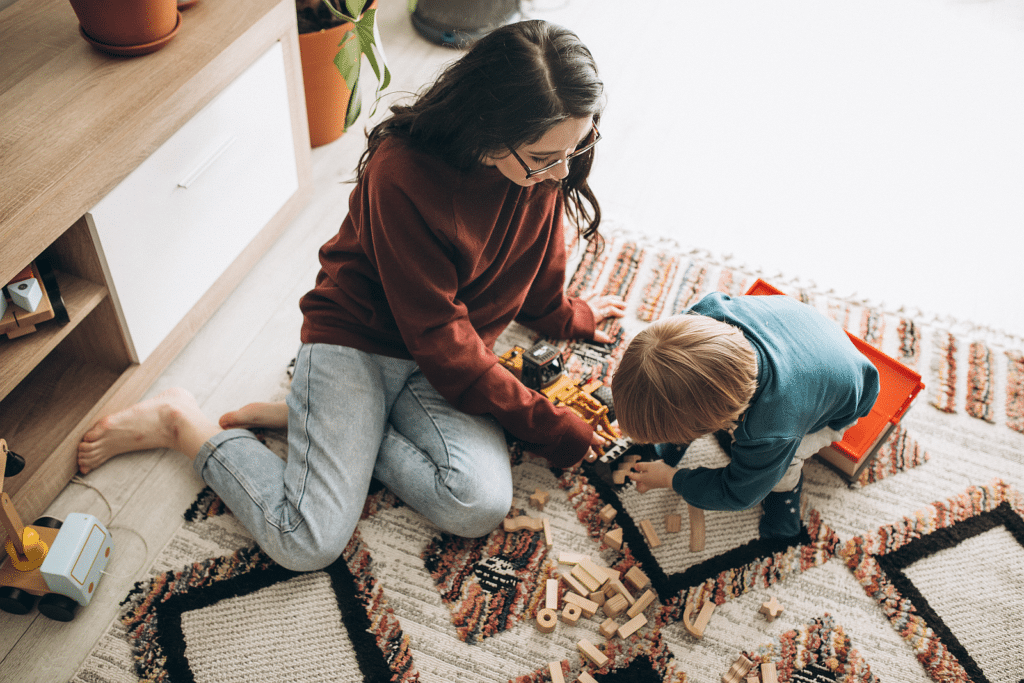
The “Nanny Effect” vs. The Classroom
Hiring a bilingual nanny is far more effective than a weekly language tutor. As Good People points out, the “immersion model” allows a child to learn naturally through play, meals, and daily routines. They absorb the nuance, intonation, and cultural empathy that a textbook can never provide. By age seven, bilingual children often outperform academic expectations , because their brains are wired for flexibility.
Why Bilingualism Wins
1. Enhanced Executive Function: Bilingual children have better focus, memory, and cognitive flexibility. Their brains are “exercised” daily through language switching.
2. Cultural Intelligence (CQ): A bilingual nanny brings a global perspective, teaching your child empathy and openness toward different traditions and worldviews from day one.
Initial challenge: The Communication Gap
The only real challenge is the initial communication barrier. In the early stages, if the nanny is not a native speaker of your home language, there might be minor misunderstandings regarding complex instructions. This is where the nanny agency input can come in handy, to guide towards a candidate who either has experience with children exposed to a foreign language for the first time or they can be a really good fit otherwise, to get through the obstacle of the initial communication barrier.
Final Verdict
An accent is a coat of paint, but bilingualism is a rock-solid foundation. Give your child the gift of a second language—it’s the ultimate cognitive head start.